 English
 русский
 Français
 中文简体
中文简体 Português
 Español
 italiano
 عربى
عربى فارسی
فارسی

Controlling a Quarter-Turn Ball Valve with a Stepper Motor: Torque, Resolution, and Honest Limits
A hybrid stepper and a 90-degree ball valve are one of the most practical pairings in automated flow control. The difference between a build that runs for years and one that stalls within a month comes down to breakaway torque, homing discipline, and knowing when the valve body itself is the wrong tool for the job.
Why the Quarter Turn and the Stepper Get Along
For on/off duty, a stepper motor is arguably the most natural actuator you can attach to a quarter-turn ball valve. The valve's entire motion envelope is 90 degrees, and a stepper's entire identity is discrete, countable position. A standard 1.8-degree-per-step motor takes 200 full steps per revolution, which means exactly 50 full steps from fully closed to fully open. Count the steps and you know where the valve sits, with no encoder required for basic positioning.
The torque side is manageable too. Maker forums regularly report hand-turning measurements in the same range: one widely cited test put a 2-inch PVC ball valve at roughly 7 lb-ft, about 9.5 Nm, of peak breakaway torque. That is a modest number for a motor, but nearly all of it is concentrated in the first few degrees of travel, where the seats are squeezed hardest against the ball. On floating-ball designs, line pressure pushes the upstream seat into the ball, so breakaway torque climbs as differential pressure climbs.
If the valve body itself is not settled yet, review the main quarter-turn valve types and applications before buying hardware, because seat design and bore shape drive every actuator decision that follows.
Torque Is the Entire Project
Speed is nearly irrelevant to a valve; torque decides whether the project works at all. A ball valve demands a short burst of high torque at breakaway and very little afterward, which happens to match how steppers behave at low speed. The practical rule is simple: size the motor and gearbox combination at two to three times the measured breakaway torque at maximum differential pressure.
In frame terms, a NEMA 17 motor with 0.4 to 0.6 Nm of holding torque is borderline for direct drive on small brass valves. A NEMA 23 with 1 to 3 Nm, geared down 3:1 to 5:1, covers most soft-seated valves up to about 2 inches with margin to spare. Larger bores and metal-seated constructions move you into NEMA 34 territory.
Several conditions quietly raise breakaway torque between design day and commissioning:
- Higher differential pressure pressing the upstream seat harder into the ball
- Long static seating, because elastomers creep after days or weeks closed
- Elevated temperature swelling soft seats and packings
- Debris, scale, or crystallizing media settling in the seat area
Gearing shifts the trade in your favor. A 5:1 gearbox multiplies torque by roughly five and divides speed by the same factor, which is exactly what a valve wants, since a 10-to-30-second travel time is normal even in industrial practice. Backlash from the gearbox is meaningless for open and close service and only matters once you try to throttle.
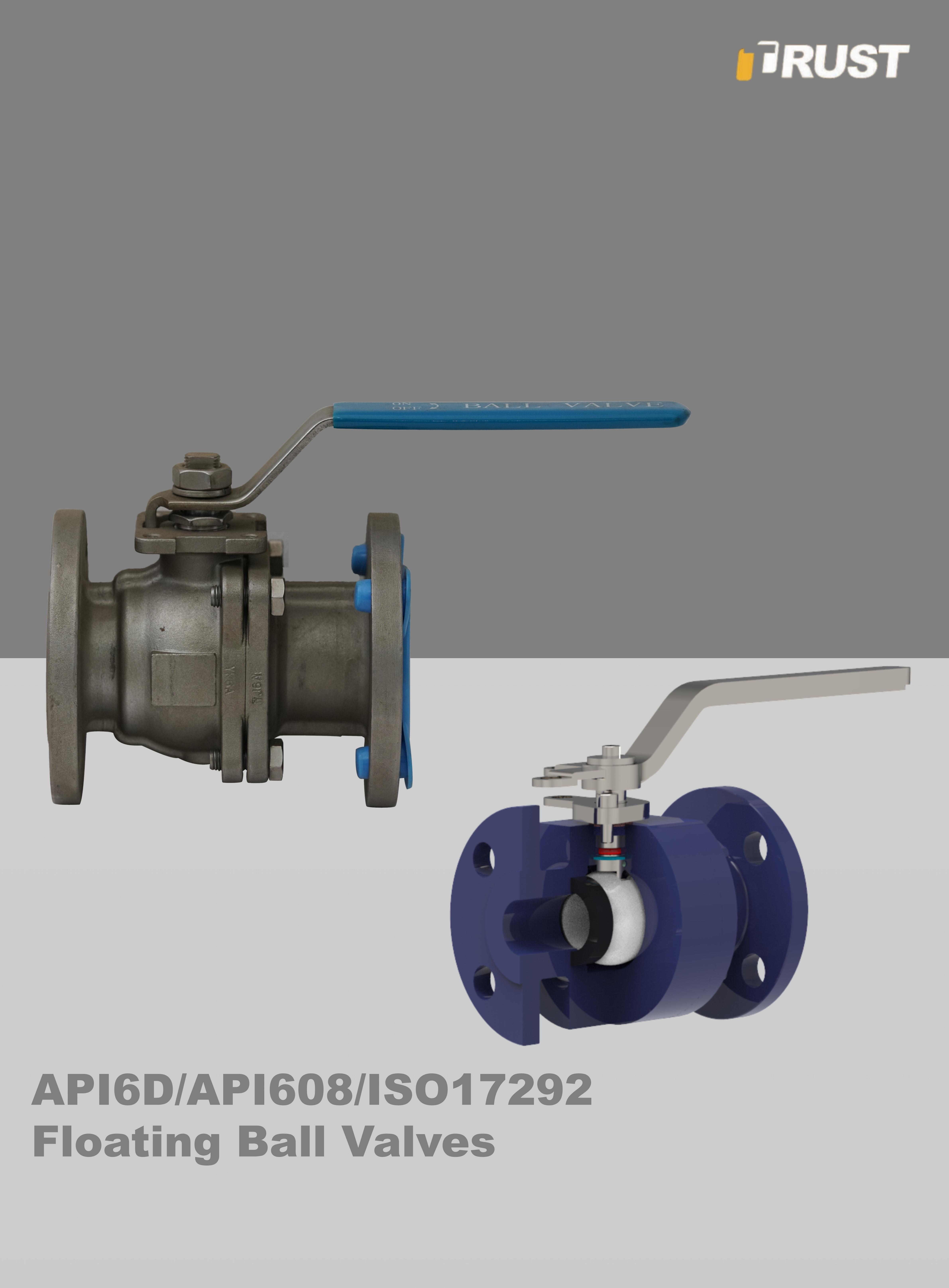 Soft-Seated Floating Ball Valves for On-Off ServiceA floating ball design with soft seats such as PTFE or Viton gives bubble-tight sealing in low to medium pressure systems. With gearing keeping travel time short, this valve suits open and close duty where backlash and throttling precision do not matter.View Product →
Resolution: Counting Steps Across 90 Degrees
Resolution is arithmetic; accuracy is engineering. The arithmetic first: 200 full steps per revolution gives 50 full steps across a 90-degree stroke, or 1.8 degrees per step. Adding 1/16 microstepping takes you to 800 microsteps and 0.1125 degrees per increment, and a gearbox divides that again by its ratio.
| Drive configuration | Increments across 90 degrees | Resolution per increment | Practical meaning |
|---|---|---|---|
| Direct drive, full steps | 50 | 1.80 degrees | Open and close only |
| Direct drive, 1/16 microsteps | 800 | 0.1125 degrees | Coarse throttling |
| 5:1 gearbox, 1/16 microsteps | 4,000 | 0.0225 degrees | Comfortable modulation zone |
| 10:1 gearbox, 1/16 microsteps | 8,000 | 0.01125 degrees | Diminishing returns for a ball valve |
Now the caveat: microstep positions are not individually calibrated on most drivers, and incremental accuracy is typically quoted only to within a few percent of a full step. The honest way to buy fine positioning is gear reduction, with microstepping used for smoothness rather than guaranteed angular truth. Either way, define zero with a limit switch at the closed seat and re-home every cycle. A stepper that never re-homes accumulates doubt, and doubt in a valve is leakage.
Open Loop Works, Until the Day It Does Not
An open-loop stepper runs on trust: the controller commands 50 steps and assumes 50 steps happened. Debris in the seat, a pressure spike, or a swollen seal can consume some of those steps silently, leaving a controller that believes the valve is closed on a valve that is passing flow. This failure mode, not wiring or software, is what separates toy projects from dependable automation.
A stepper never knows where the valve is. It only knows where it told the valve to be. Every newton-meter of margin you skip comes back later as a missed step.
The fixes are cheap compared with the failure. Fit limit switches so the controller can re-home to the closed seat, prefer drivers with stall detection that infer overload from the motor's electrical behavior, and re-home after any fault rather than resuming mid-stroke. A self-locking worm gearbox adds a second layer of comfort by holding position when power is removed.
Info - a proven baseline: NEMA 23 motor rated 1 to 2 Nm, 5:1 worm or planetary gearbox, closed-position limit switch, driver current set to the motor's rating, 1/16 microstepping. This combination cycles most soft-seated ball valves up to 2 inches with torque to spare.
Modulating Flow: The Valve Body Is the Weak Link
A stepper can modulate anything you couple to it; whether the result resembles flow control is decided by the ball. A standard soft-seated ball valve has a quick-opening characteristic: most of its capacity change happens in roughly the first third of rotation, and the remaining degrees barely matter. Near the closed seat, throttling concentrates the full pressure drop into a narrow gap, driving velocity up and inviting erosion, cavitation in liquids, and accelerating seat wear.
If the goal is genuine regulation, use a valve shaped for it. Characterized balls, such as V-port and C-ball designs, reshape the flow path so capacity rises more gradually, delivering far better rangeability and a more repeatable relationship between step count and flow. Globe valves remain the reference for fine continuous control, but for stepper-driven throttling on a budget, a characterized quarter-turn valve is the sensible middle ground.
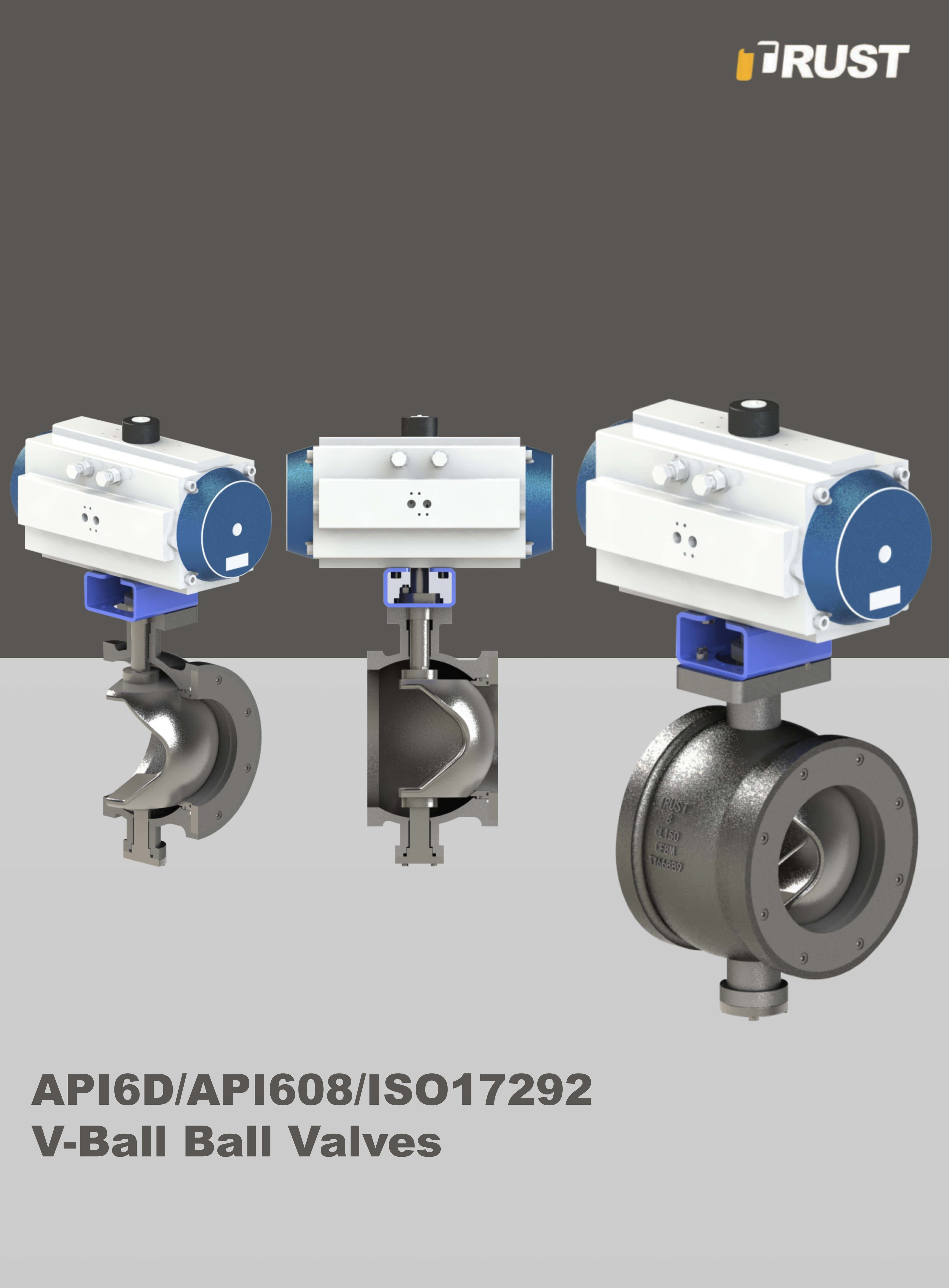 V-Ball Control Valves for Precise ThrottlingThe V-notched ball delivers near-linear flow characteristics and a high turndown ratio, so stepper step counts map more predictably to flow. For budget-conscious regulation duty, it offers a sensible middle ground between standard ball valves and globe valves.View Product →
Warning: holding a standard soft-seated ball valve partially open for long periods raises seating torque and gradually wears the seat. Expect rising breakaway torque over weeks and schedule the rebuild before it becomes a shutdown.
Benchtop Build or Process Installation?
Be honest about which world the build lives in. A stepper retrofit is entirely reasonable for water lines, coolant circuits, HVAC dampers, pilot skids, and test benches, where the cost of a missed step is a mop or a restart. Operators running oil and gas flow duties, steam, or toxic media specify certified electric or pneumatic actuators instead, with documented torque sizing, spring-return fail action, and hazardous-area enclosures, because there a valve is a safety device as much as a flow device.
Severe service narrows the gap further. Metal-seated valves built for high temperature, abrasive, or slurry media have higher breakaway torque that grows unpredictably after thermal cycling, which puts them beyond hobby-class hardware. One tip crosses both worlds: specify valves with an ISO 5211 mounting pad, and the stepper bracket bolts on without machining the stem or improvising a coupling.
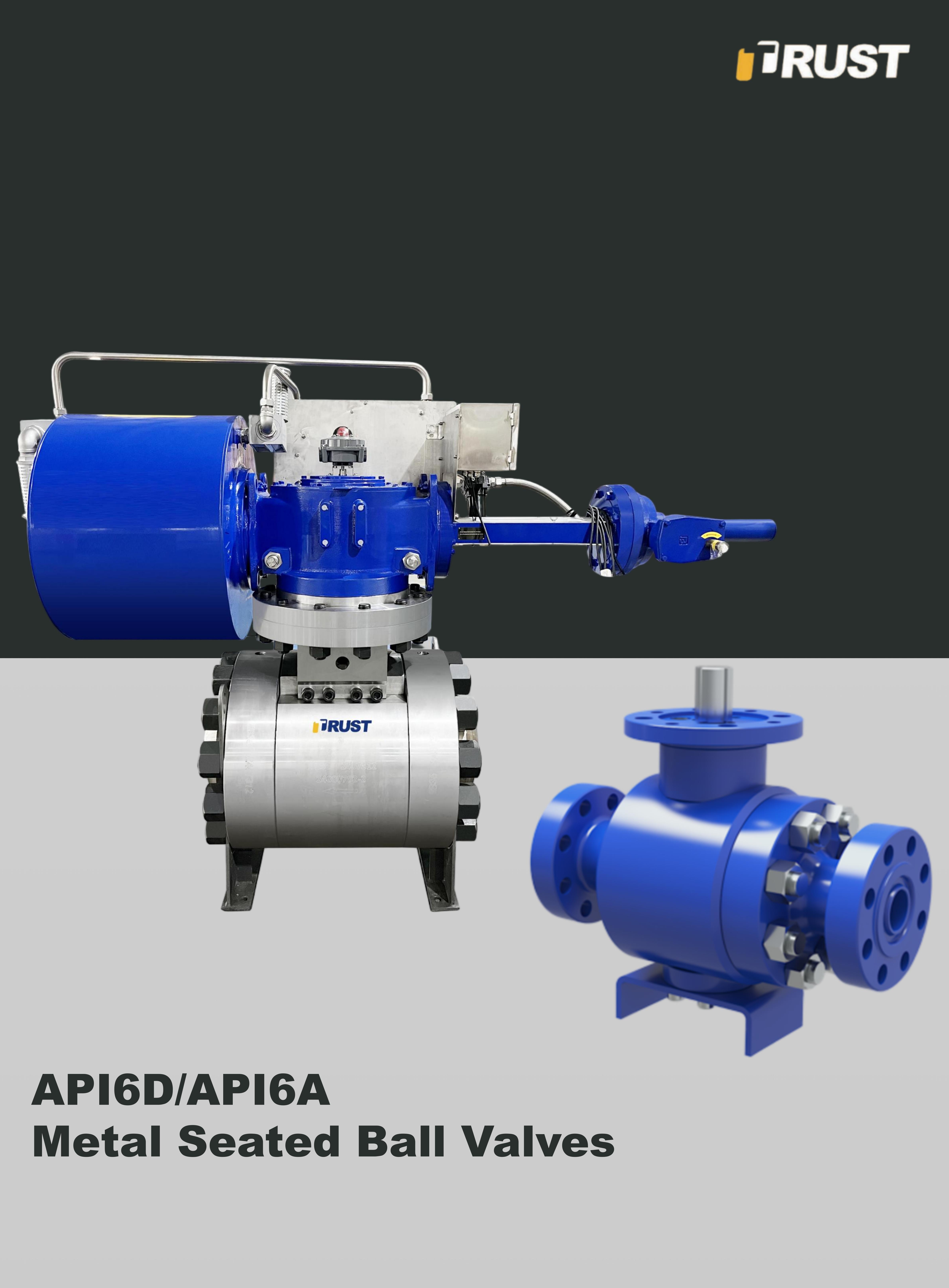 Metal Seated Ball Valves for Severe ServiceBuilt with metal-to-metal sealing and HPHT-resistant alloys for extreme temperatures, pressures, and abrasive media. Their higher, unpredictable breakaway torque demands an actuator sized well beyond hobby-class hardware.View Product →
Danger: a stalled actuator that reports "closed" while the valve passes flow is not an inconvenience; in flammable or toxic service it is a process safety event. If the consequence of a passed valve is serious, add independent position feedback or move to an actuator with a documented fail position.
A Sizing Checklist You Can Run Today
Run this sequence before committing to hardware and most stepper-valve failures never get the chance to happen:
- Measure breakaway torque at maximum differential pressure, after a 24-hour static soak if the valve sits closed for long periods.
- Size the motor plus gearbox at two to three times that number, buying the margin with gearing rather than a bigger frame.
- Compute steps per degree for your gearing and microstep setting, then decide whether that resolution is actually needed.
- Fit a limit switch at the closed position, ideally one at open as well, and re-home every cycle or after any fault.
- Set driver current to the motor's rating and confirm the case stays under about 60 degrees Celsius in repeated cycling.
- Use a preloaded or zero-backlash coupling between motor and stem, aligned carefully before final tightening.
- Dry-cycle at least 100 times before pressurizing, then re-measure breakaway torque to catch early seat wear.
- Log every stall event and treat the first one as a design problem rather than bad luck.
Success looks like this: the closed limit switch trips at the same step count every cycle, the motor case stays warm rather than hot, and breakaway torque measured after a week of static seating still sits inside your two-to-three-times margin.
The Takeaway
A stepper motor and a quarter-turn ball valve deserve each other, as long as the courtship is honest. The 90-degree stroke maps cleanly onto countable steps, slow travel keeps the motor in its strongest region, and a modest gearbox turns hobby-class torque into genuine valve-turning force. Spend the engineering effort where failures actually live: measure breakaway torque with pressure behind the seat, home the actuator to a real switch instead of a hope, choose a characterized valve when the job is throttling rather than isolation, and know the point at which a benchtop build must hand responsibility to certified equipment. Do those four things, and the 50 steps between closed and open will read the same a decade from now as they do on day one.
 No.100 Xiejin Avenue, Zona di Sviluppo Economico di Funing, Città di Yancheng, Provincia di Jiangsu
  +86-515-87398111
  office@trustvalve.com